
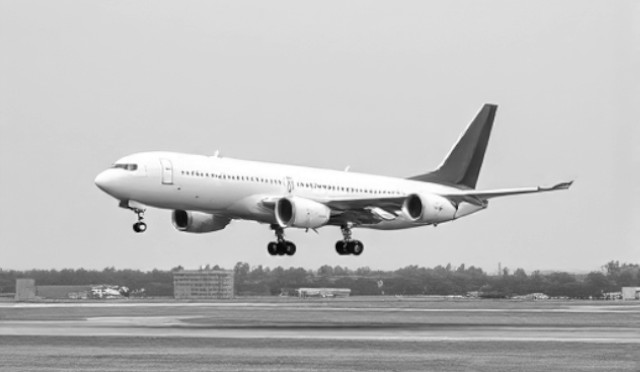
Norse Atlantic Airways [Euronext:NORSE.OL] ended 2025 with a flourish, posting robust passenger growth and near-full aircraft as the low-cost long-haul carrier continues to refine its business model.
December, traditionally a demanding month operationally, delivered particularly strong results: more than 151,000 passengers flew with the airline, a 22 per cent increase on the same month a year earlier.
Even more striking was the load factor. Across the airline’s network and its ACMI and charter operations, planes flew 98 per cent full, up four percentage points year on year and marking the fourteenth consecutive month above 90 per cent.
- WH Smith: Shares dropping on weaker profits, FCA investigation
- Turbulence ahead for easyJet shareholders?
- Wizz Air lifts profits as capacity grows
In an industry where profitability hinges on keeping seats filled, such consistency offers reassurance that demand is tracking ahead of capacity.
For the full year, Norse Atlantic carried 1.84m passengers, up 26 per cent from 2024, with an average load factor of 96 per cent across all operations. That figure represents a 12-percentage-point improvement on the previous year and reflects what the company describes as a successful transition to a dual-strategy model in the second half of 2025.
The airline now divides its fleet between its own scheduled transatlantic network and longer-term ACMI and charter contracts that provide more stable revenues. By the end of December, five aircraft were flying under charter arrangements for India’s IndiGo, with a sixth due to be delivered in early 2026. The remaining aircraft operate Norse Atlantic’s branded services, supplemented by seasonal charter flying tied to the cruise industry.
Norse Atlantic saw a busy December
Operationally, December was busy. Norse Atlantic operated 281 flights on its own scheduled network and a further 254 ACMI and charter flights, a sharp increase on the year before. Load factors in the scheduled network reached 96 per cent, compared with 92 per cent in December 2024, underscoring improved performance in routes where the airline controls pricing and capacity.
Punctuality, however, proved more challenging. The airline completed 97 per cent of scheduled flights during the month, slightly below last year, while just over half of its own-network departures left within 15 minutes of schedule.
Management attributed the slippage largely to air traffic control delays, airport congestion and adverse weather during the peak holiday period. Temporary capacity reductions linked to engine maintenance also weighed on operations, an issue the airline has flagged previously.
Eivind Roald, Norse Atlantic’s chief executive, struck an upbeat tone. “We complete 2025 with strong passenger growth, increased production and full flights,” he said, pointing to an attractive product in a fiercely competitive market. He credited recent operational improvements and staff efforts with delivering tangible progress, despite the inevitable disruptions of a busy winter season.
Transition to balanced business model
The strategic shift appears to be resonating with customers as well as investors. Norse Atlantic’s winter programme, which includes new routes and higher frequencies, has been “well received”, according to Roald, with strong travel demand complemented by high cargo volumes. Freight, often an overlooked revenue stream for passenger airlines, has become an increasingly useful buffer in volatile markets.
Looking ahead, the airline expects to complete its transition to what it calls a balanced business model later this month. With six aircraft generating predictable charter earnings and the rest deployed on a “high-graded” scheduled network, Norse Atlantic is aiming to combine growth with greater resilience. After a year of fuller planes and firmer footing, the carrier enters 2026 with cautious confidence.






















Comments (0)